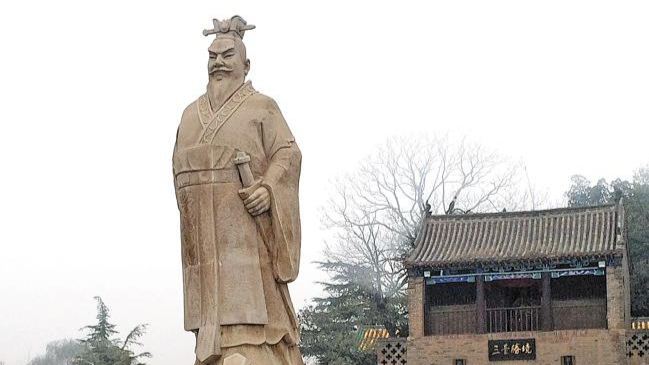
Cao Cao
Introduction
Cao Cao, a prominent figure in Chinese history, was a warlord who played a pivotal role during the late Eastern Han Dynasty's tumultuous era. Known for his political acumen, military prowess, and contributions to Chinese literature, he is often remembered through various cultural depictions and historical accounts. Cao Cao’s influence extended beyond the battlefield; he was a skilled poet and a reformer who implemented various administrative changes to stabilize his regime. Over the centuries, Cao Cao's life and exploits have captured the imagination of countless audiences, inspiring numerous adaptations in films, operas, and literature.
Early Life and Rise to Power
Cao Cao was born in the year 155 into a family with a military background, in the ancient city of Qiao, located in the Pei Commandery, which is now part of modern-day Anhui province. His father, Cao Song, was adopted by the eunuch Cao Teng, who served as an official in the Han government, providing Cao Cao with connections to the imperial court. Demonstrating his talents from an early age, Cao Cao quickly rose through the ranks by showcasing his exceptional skills in administration and military strategy.
Cao Cao's rise to power coincided with a period of great upheaval in China, as the Eastern Han Dynasty was plagued by internal strife and external invasions. During this era, regional warlords vied for control, and Cao Cao capitalized on the chaos to expand his influence. One of his significant early achievements was the suppression of the Yellow Turban Rebellion, a peasant uprising that posed a significant threat to the Han Dynasty. This victory not only elevated his status but also bolstered his military reputation. As the power of the central government waned, Cao Cao established a stronghold in Xuchang, transforming it into a political, economic, and cultural center in northern China. From this base, he consolidated his power, ultimately positioning himself as one of the foremost leaders during the Three Kingdoms period.
Military Campaigns
Cao Cao's military campaigns were a defining aspect of his career, as he sought to unify China under his rule during the waning years of the Han Dynasty. His military endeavors were characterized by strategic brilliance and ruthless efficiency, earning him both admiration and enmity. One of his earliest and most notable campaigns was against the powerful northern warlord Yuan Shao, culminating in the decisive Battle of Guandu in 200 AD. Despite being outnumbered, Cao Cao employed superior tactics to secure a victory that solidified his control over northern China.
Perhaps Cao Cao's most famous military engagement was the Battle of Red Cliffs in 208 AD, where he faced a coalition of southern warlords, including Sun Quan and Liu Bei. This battle, fought on the waters of the Yangtze River, is one of the most well-known in Chinese history due to its dramatic and strategic nature. Despite his confidence and numerical advantage, Cao Cao's forces were defeated due to the combined might and clever tactics of his adversaries. This setback marked a turning point in his military ambitions, as it halted his southward expansion and preserved the independence of the southern states.
In addition to these significant battles, Cao Cao conducted numerous other campaigns to secure his territories and eliminate rival warlords. His military strategy often involved swift and decisive actions aimed at destabilizing and defeating his opponents before they could rally against him. This approach enabled him to maintain a dominant position in the fragmented political landscape of the time.
Governance and Reforms
As a ruler, Cao Cao was not only a formidable military leader but also an astute administrator who introduced several reforms to enhance the efficiency and stability of his regime. Recognizing the need for strong governance to sustain his military gains, Cao Cao implemented policies that streamlined administration and improved resource management. One of his key reforms was the introduction of the "Tuntian" system, which involved settling soldiers and civilians in agricultural colonies to increase food production and reduce reliance on external supplies.
Cao Cao also focused on strengthening the central authority by curbing the power of local warlords and ensuring loyalty through strategic appointments and alliances. He was known for his pragmatic approach to governance, valuing talent and capability over familial ties or noble status. This meritocratic system allowed him to attract and retain skilled administrators and military leaders, which contributed to the success of his administration.
In addition to these administrative reforms, Cao Cao was keenly aware of the importance of cultural and intellectual pursuits. He encouraged scholarly activities and supported the compilation of historical texts, preserving the cultural heritage of the Han Dynasty while promoting new literary works. His governance was marked by a balance between strict control and cultural patronage, which helped maintain stability in his territories amid the broader chaos of the Three Kingdoms period.
Literature and Legacy
Cao Cao's legacy extends beyond his military and political accomplishments, as he was also a patron of the arts and a contributor to Chinese literature. His writings reflect his strategic mind and complex personality, offering insights into the thoughts of a man who navigated the turbulent times of the Three Kingdoms period.
Poetry and Writings
Cao Cao was an accomplished poet, and his works are celebrated for their emotional depth and philosophical reflections. His poetry often embodies themes of ambition, the transience of life, and the complexities of leadership. One of his most famous poems, "The Song of the Yan," expresses his longing for unity and peace amid the turmoil of war. His literary contributions have been preserved in anthologies and continue to be studied for their artistic and historical significance.
Cao Cao's writings were not limited to poetry; he also composed essays and military treatises that showcased his strategic thinking and governance philosophy. His works have been influential in shaping subsequent generations' understanding of leadership and statecraft, cementing his reputation as a multifaceted figure in Chinese history.
Historical Reputation
Cao Cao's historical reputation is complex and multifaceted, shaped by both contemporary accounts and later interpretations. In the "Romance of the Three Kingdoms," a 14th-century historical novel by Luo Guanzhong, Cao Cao is portrayed as a cunning and ambitious figure, often depicted as the antagonist to the novel's heroes. This portrayal has contributed to his image as a controversial character, admired for his talents but criticized for his ruthless methods.
Despite the mixed views, Cao Cao is recognized as a pivotal figure in Chinese history, whose actions significantly influenced the course of the Three Kingdoms era.
Death and Succession
Cao Cao's death in 220, marked the end of an era, but it was by no means the conclusion of his influence on Chinese history. The succession of leadership within the Cao family was carefully orchestrated, with his son Cao Pi inheriting his father's titles and responsibilities. Under Cao Pi's leadership, the state of Wei was officially founded, marking the transition from the Han Dynasty to the Three Kingdoms period.
Cao Cao's foresight in preparing his sons for leadership ensured a relatively smooth transition of power, with Cao Pi demonstrating the same strategic acumen that characterized his father's rule. This continuity allowed the Cao family to maintain control over their territories and solidify their position in the newly established state of Wei.
Cultural Depictions
Cao Cao's life and legacy have been the subject of numerous cultural depictions, reflecting his enduring impact on Chinese culture and history. His character has been portrayed in various media, including novels, operas, films, and television series, each offering a different perspective on his complex persona.
The "Romance of the Three Kingdoms" remains one of the most influential cultural works featuring Cao Cao, presenting him as a key player in the epic struggle for control of China. This portrayal has been adapted into countless operas and stage performances, such as the Hanju Opera "Drumming and Cursing Cao Cao," which continues to captivate audiences with its dramatic retelling of historical events.
In modern times, Cao Cao has been depicted in films and television series, such as "The Advisor Alliance," where his strategic brilliance and multifaceted character are explored in depth. These adaptations highlight the timeless appeal of Cao Cao's story and his role as a central figure in one of China's most storied periods.








